Saturday, May 16, 2015

Racial segregation in Chicago...

Chicago continues to be one of the nation's most segregated cities.  This animated gif provides a striking visual of Chicago's racial segregation over time.  Notice the location of Chicago's "Black Belt" in the period before the 1950's.  What happens to the African-American population post the civil rights era of the 1960s?  When do Chicago majority Latino communities form?  Locate the neighborhood you are studying on the map...

Gentrification in Chicago...

One of the most pressing issues facing many Chicago neighborhoods is the issue of "gentrification". Gentrification is the process by which real estate developers and property investors with significant sources of money take interest in an area that has generally been historically low income and were therefore, property values have been low.  These individuals or companies start to buy properties in the community, often investing considerable money in the renovation of these properties to make them more desirable to other potential property buyers, investors and real estate interests.  A cycle is set in motion by which as the properties become more and more desirable, property values begin to rise.  New residents with the money to afford the increasing home prices and rents start to move in.  But those who can not afford the higher property taxes and rents are forced to move out.  Like most issues in the U.S. were class is very "racial;ized", this often means not only a class transformation of the community but also a race/ethnic transformation as more affluent whites replace other groups.

"Re-gentrification" refers to a community that was originally wealthy and desirable, declined in value over a period of time, but has since started to reverse course once again, with new interest and new investment leading to displacement of low income residents.  An example of gentrification in Chicago is Pilsen, which has always been low income, working class and immigrant, but which is slowly becoming more expensive and more white.  On the other hand, a community like Lincoln Park started out as a wealth community in the late 1900's, but became mostly working class by the 1930s and 40s.  By the late 1970's re-gentrification took hold and transformed Lincoln Park into what it is today, primarily a community for the elite who can afford the high rents and property values.

The following links provide some insight on what communities are effected most by gentrification in Chicago and which are being effected the least.  I caution you that I have some criticism of the graphs presented here.  From my experience almost all of Chicago is being impacted by gentrification.  I would argue that the neighborhoods indicated on the map as "not gentrifying" is a misleading.  I would call them less currently gentrified, but in the process of gentrifying...

http://www.voorheescenter.com/#!gentrification-index/ccmx

This link also has some great data on each neighborhood for your demographic data.  Check it against what you have already collected...

http://interactive.wbez.org/gentrification/

Monday, May 11, 2015

Workers struggles in Chicago history...


We have been discussing the role of immigrants and workers in shaping the history of Chicago.  Use the following site to learn more about some of the most important events in Chicago labor history...

http://www.illinoislaborhistory.org/resources/illinois-history-sites/chicago-sites.html

Click on the names labeled on the map.  Each will have links to additional information.

1. Describe the events surrounding the "Haymarket tragedy".

2. Describe the events of the Pullman Strike.

3. What was the "Memorial Day Massacre"?

4. How did workers try to organize the stockyards?

Tuesday, May 5, 2015

Links to help with research for your papers...

The following links should be good sources of information for your papers, no matter what neighborhood you are researching.

The Encyclopedia of Chicago will have good general histories for all your neighborhoods.  You will need to type your neighborhood name in the search box...

http://www.encyclopedia.chicagohistory.org/

You can browse the Chicago Public Library's Chicago History page...

http://www.chipublib.org/chicago-history/

This link will give you info on how neighborhoods have changed in the past 30 years...

http://www.uic.edu/cuppa/voorheesctr/Gentrification%20Index%20Site/Main%20Neighborhood%20Change%20Revised.htm

Here are wikipedia pages on Chicago community area and neighborhood history.  Remember, it is OK to reference Wikipedia BUT IT CAN NOT BE YOUR ONLY SOURCE.  Verify the information from other sources...

http://en.wikipedia.org/wiki/Community_areas_in_Chicago

http://en.wikipedia.org/wiki/Neighborhoods_in_Chicago

This webpage put togther by the Newberry Library has lots of helpful links...

http://www.newberry.org/chicago-neighborhood-guide

Use the Labor Trail website to find out about historical events and important sites in your neighborhood...

http://www.chicagolabortrail.org/

This website tells you how the neighborhoods got their names...

http://mentalfloss.com/article/55060/how-chicagos-neighborhoods-got-their-names

This webpage will give you news stories on all Chicago's neighborhoods.  Just click on the neighborhood's tab...

http://www.dnainfo.com/chicago/

Here is a link to an essay I wrote on Pilsen's history...

http://pilsenprole.blogspot.com/2012/05/1877-2011-134-years-of-social-struggle.html

For more on Chicago's labor history and Pilsen's role in it...


To learn more about the 1877 General Railroad Strike, the events of Haymarket in 1886 and Pilsen's role in these events, check out this essay I wrote for a publication several years ago... 

http://pilsenprole.blogspot.com/2012/05/1877-2011-134-years-of-social-struggle.html

Thursday, April 30, 2015

More links to help with your research...

Here are more links you can use for research on your general history section and the conflicts and challenges section of your paper:

This website is a real estate orientated website that has some general history about all of your neighborhoods.  You need to select your neighborhood in the drop down box.  Keep in mind, since it is a real estate orientated website it will tend to promote the positive qualities of the community over negative ones and will tend to pro-gentrification...

http://www.dreamtown.com/neighborhoods/chicago-neighborhoods.html

Here is another real estate orientated website...

http://www.chicagoneighborhoods.cc/chicago-neighborhoods.html

For the conflicts and challenges piece, try searching the Chicago Tribune and Chicago Sun Times archives for articles related to your neighborhood.  You will need to log in to the Chicago Public Library website with your elibrary card number...

http://search.proquest.com.gatekeeper.chipublib.org/chicagotribune/index?accountid=303

http://infoweb.newsbank.com.gatekeeper.chipublib.org/iw-search/we/InfoWeb?p_product=NewsBank&p_action=explore&p_theme=aggregated5&p_nbid=M65Y56UUMTQyMTQyMzMzOS4zMjE3MDA6MToxMTo2Ni45OS41LjE2Ng&p_clear_search=yes&d_refprod=NEWSARCHIVES&f_clearContext=yes&d_place=CSTB

If those links do not work for you, go to the Chicago Public Library website and find the links to the Chicago Tribune and Chicago Sun Times on this page...

http://www.chipublib.org/chicago-newspapers-on-microfilm/

Tuesday, April 28, 2015

Chicago's rich labor and neighborhood history...


This week we start talking more about Chicago's rich labor history - Unit 2: Working Class Chicago.  You are also starting work on your Neighborhood History Projects.  Both of these topics can be combined.  As you research your neighborhood, think about how neighborhood history intersects with labor history.  Check out this website for ideas...

http://www.chicagolabortrail.org/

On the website you can select a specific neighborhood and read about important events in labor history that took place in that community.  Explore the site, you can learn a lot!

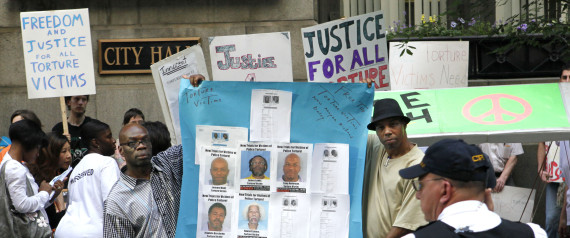
Victims of police torture in Chicago get reparations...

CHICAGO POLICE TORTURE


Finally some of the victims of police torture in Chicago are being compensated in some way.  It certainly does not erase the harm done the victims but at least some official recognition is being given.  What do you think?...


http://www.huffingtonpost.com/2015/04/14/chicago-police-torture-reparations_n_7064072.html?utm_hp_ref=chicago&ir=Chicago

Thursday, April 16, 2015

Websites for demographic data...

You need to collect demographic data for your neighborhood.  You should list this data on a Google Doc which you share with me.  You may also turn this into a blog post if you wish.  You could write a blog post about the neighborhood you are studying that includes the demographic data you found.

Refer to your handout describing the Neighborhood History Project for what should be included in regards to demographic data.  Demographic data should include…

Race/Ethnicity
Average income
Percentage of people under poverty line
Density of the neighborhood’s population
Percentage of residents that are immigrants
Is it a residential, commercial, industrial or mixed use community?

Most of the current demographic data will be based on the last census taken in 2010 and so will be four year old data at this point.

This website put together by the Heartland Alliance, one of Chicago’s oldest and best social service agencies includes a downloadable PDF document that includes almost all the demographic data you will need for your community area.  You will need to download the PDF…

http://socialimpactresearchcenter.issuelab.org/resource/chicago_neighborhood_indicators_2000_2012_1

The website City-Data is one of the most complete sources of demographic information on the web.  The only source that is more complete is the U.S. Census Bureau itself.  But U.S. Census data is “raw data” that is not broken down by neighborhood or explained simply in percentages.  City-Data takes the census data and makes it easier to understand.  This link provides a map of Chicago neighborhoods that you can click on.  Once you select a neighborhood on the map, the page that comes up will give almost all the demographic data you need…

http://www.city-data.com/nbmaps/neigh-Chicago-Illinois.html

It is NEVER a good idea to rely on one source.  So check out these other websites and verify the data closes matches what is on City-Data.

Some teachers will tell you never to use Wikipedia.  I am not one of them.  Wikipedia can be a useful source of information BUT NEVER TRUST WIKIPEDIA BY ITSELF!  Always double check the info at other sources.  This Wikipedia page list all the Chicago community areas and neighborhoods.  Select the link to the Wikipedia page for the community your researching and you will get both demographic data and neighborhood history as well…

http://en.wikipedia.org/wiki/Community_areas_in_Chicago

This website put together by the University of Illinois at Chicago (UIC) gives data on how neighborhoods have changed over the decades by only goes up to 2000…

http://www.uic.edu/cuppa/voorheesctr/Gentrification%20Index%20Site/Main%20Neighborhood%20Change%20Revised.htm

This website put together by Northwestern University includes health data about various communities in Chicago…
http://chicagohealth77.org/

This page of the site lists the race/ethnicity percentage for each of the 77 community areas in Chicago…

http://chicagohealth77.org/characteristics/demographics/

This website provides the percentages of foreign born (immigrant) from the 1930’s through the 2009 for each community area…

http://www.robparal.com/downloads/ACS0509/HistoricalData/Chicago%20Community%20Areas%20Historical%20Data.htm

This website put together by Illinois Action for Children gives race/ethnicity data and the percentage of children in each community living in poverty…

http://www.actforchildren.org/site/DocServer/2010_Census_Data_Fact_Sheet_by_Chicago_Community_Area.pdf?docID=1741

This article includes a animated gif that shows racial changes in Chicago’s neighborhoods from 1910 until 2000.  Note the “black belt” or Bronzeville which emerges in 1920 and than how African-American neighborhoods expanded after the civil rights area of the 1960s.  Also note the growth of Latino neighborhoods after 1980…

http://www.huffingtonpost.com/2013/01/29/chicago-racial-demographi_n_2575921.html

Wednesday, April 1, 2015

Chicago's rich labor and neighborhood history...


After break we will start talking more about Chicago's rich labor history - Unit 2: Working Class Chicago.  You are also starting work on your Neighborhood History Projects.  Both of these topics can be combined.  As you research your neighborhood, think about how neighborhood history intersects with labor history.  Check out this website for ideas...

http://www.chicagolabortrail.org/

On the website you can select a specific neighborhood and read about important events in labor history that took place in that community.  Explore the site, you can learn a lot!

Monday, March 30, 2015

Friday, March 27, 2015

Mayoral debate...

Last night, Jesus Garcia and Rahm Emmanuel participated in a debate as the mayoral election draws close.  Here are some links to what happened...

http://www.chicagotribune.com/news/local/politics/ct-chicago-mayor-debate-met-0327-20150326-story.html#page=1

https://www.youtube.com/watch?v=HBBB7Rhwzxs

What do you think?  Which candidate do you support?  What issues are not being addressed?

Wednesday, March 25, 2015

Links to help with your neighborhood maps...

Your first due date in regards to your neighborhood history project is a map of either the neighborhood or community area you will be researching.  Sometimes the neighborhood and community area are the same.  In that case you do not have to chose which to map.  In other cases the neighborhood and community area is different.  In those cases you need to chose which to map. 

While the neighborhood might be more familiar to people, the community area is often easier to map as those boundaries are set by the City, are fixed and do not change over time.  The neighborhood names and boundaries are not fixed and evolve over time.  As a result different people have different ideas of what constitutes a particular neighborhood.

Here are some websites that can help you identify your neighborhood, community area and the boundaries for both...

http://www.cityofchicago.org/city/en/depts/doit/supp_info/citywide_maps.html

Here are links with information on the City of Chicago's 77 official Community Areas...

https://www.cityofchicago.org/content/dam/city/depts/doit/general/GIS/Chicago_Maps/Citywide_Maps/Community_Areas_W_Numbers.pdf

https://www.google.com/maps/d/viewer?msa=0&mid=zqLSkU3XYPyg.kAdNFe-Yq3dk

https://familysearch.org/learn/wiki/en/Chicago,_Illinois

http://en.wikipedia.org/wiki/Community_areas_in_Chicago

Here are various versions of maps of Chicago's unofficial neighborhood names...

http://www.cityofchicago.org/content/dam/city/depts/doit/general/GIS/Chicago_Maps/Citywide_Maps/City_Neighborhoods_1978_11x17.pdf

https://www.google.com/maps/d/viewer?msa=0&mid=zYiwUHdW8Wmg.kNxj-e0srss0

http://www.dreamtown.com/maps/chicago-neighborhood-map.htm

http://chicagoneighborhoods.cc/chicago-neighborhoods.html

http://yochicago.com/chicago-neighborhoods/

You should also figure out which ward your neighborhood is in.  Here are links to ward maps for Chicago...

http://www.chicagoelections.com/en/ward-maps-and-aldermen.html

http://www.cityofchicago.org/dam/city/depts/doit/general/GIS/Chicago_Maps/Citywide_Maps/Wards.pdf

http://www.cityofchicago.org/city/en/about/council.html

http://www.wbez.org/no-sidebar/approved-ward-map-95662

Wednesday, March 11, 2015

Was the attack on Ft. Dearborn a massacre?...

This article is from 2009, but the issues raised in it are relevant to what we are currently covering in class.  The removal of Native Americans from Northern Illinois, Chicago's "first social struggle", is not just something of the past, but an issue that still stirs emotion among Chicagoans today...

http://articles.chicagotribune.com/2009-08-14/news/0908130999_1_chicagoans-battle-dearborn-group

Here are more links with more background on the events around Ft. Dearborn in 1812...

http://www.wbez.org/blogs/john-r-schmidt/2012-08/200-years-ago-fort-dearborn-massacre-101503

http://www.chicagomag.com/core/pagetools.php?pageid=11462&url=%2FChicago-Magazine%2FDecember-2009%2FThe-True-Story-of-the-Deadly-Encounter-at-Fort-Dearborn%2Findex.php&mode=print

Monday, March 9, 2015

Tomorrow we are going to be visited by organizers from the Fight for 15...

Tomorrow organizers from the "Fight for 15" will be visiting our class to talk about issues facing low wage workers in our economy.  In this class, we will be discussing the history of working people in Chicago.

I want you to check out the following links and respond in on your blog.  First, watch the video at this site...

http://fightfor15.org/

Then read some of the articles here...

http://fightfor15.org/latest-news/

The Fight for 15 has already had some sucesses.  Read about that here...

http://www.peaceandjustice.org/an-87-percent-vote-for-a-15-an-hour-wage/

Respond to all this on your blog.  And think of questions you might have for our guest speakers tomorrow.

Tuesday, February 24, 2015

Chicago Police secret detentions...


This is a stunning story of police abuse of power in Chicago. I would love for you all to read this article and provide feedback on your own blogs...

http://www.theguardian.com/us-news/2015/feb/24/chicago-police-detain-americans-black-site

Monday, February 23, 2015

Welcome to the world of blogging...

Hi Class,

Your blog is like an online journal.  You will be able to respond to topics discussed in the course and dialog with your fellow students and instructor via your blog.


For your first post tell me something about yourself.  Draw on what you are including in your "Who I Am" essay.  You could include stuff like your family background, neighborhood, culture, interests, etc.


For your second post I want you to answer the following questions...


1. What is the name of your neighborhood?:


2. What is the Community Area of your neighborhood?:


3. What part of the Chicago is your neighborhood in?  For example, Northwest side, Southeast side, etc.:


4. What is the main street intersection in your neighborhood?:

You can use these links to help you find answers to these questions...


https://www.google.com/maps/d/viewer?msa=0&mid=zMJNg4elItME.kA0ynckFQBdM


https://www.google.com/maps/d/viewer?msa=0&mid=zqLSkU3XYPyg.kAdNFe-Yq3dk


https://www.google.com/maps/d/viewer?msa=0&mid=zYiwUHdW8Wmg.kNxj-e0srss0


https://www.cityofchicago.org/content/dam/city/depts/doit/general/GIS/Chicago_Maps/Citywide_Maps/Community_Areas_W_Numbers.pdf


http://www.cityofchicago.org/content/dam/city/depts/doit/general/GIS/Chicago_Maps/Citywide_Maps/City_Neighborhoods_1978_11x17.pdf


http://en.wikipedia.org/wiki/Community_areas_in_Chicago


http://en.wikipedia.org/wiki/Neighborhoods_in_Chicago


Happy Blogging