Monday, May 11, 2015
Workers struggles in Chicago history...
We have been discussing the role of immigrants and workers in shaping the history of Chicago. Use the following site to learn more about some of the most important events in Chicago labor history...
http://www.illinoislaborhistory.org/resources/illinois-history-sites/chicago-sites.html
Click on the names labeled on the map. Each will have links to additional information.
1. Describe the events surrounding the "Haymarket tragedy".
2. Describe the events of the Pullman Strike.
3. What was the "Memorial Day Massacre"?
4. How did workers try to organize the stockyards?
Tuesday, May 5, 2015
Links to help with research for your papers...
The following links should be good sources of information for your papers, no matter what neighborhood you are researching.
The Encyclopedia of Chicago will have good general histories for all your neighborhoods. You will need to type your neighborhood name in the search box...
http://www.encyclopedia.chicagohistory.org/
You can browse the Chicago Public Library's Chicago History page...
http://www.chipublib.org/chicago-history/
This link will give you info on how neighborhoods have changed in the past 30 years...
http://www.uic.edu/cuppa/voorheesctr/Gentrification%20Index%20Site/Main%20Neighborhood%20Change%20Revised.htm
Here are wikipedia pages on Chicago community area and neighborhood history. Remember, it is OK to reference Wikipedia BUT IT CAN NOT BE YOUR ONLY SOURCE. Verify the information from other sources...
http://en.wikipedia.org/wiki/Community_areas_in_Chicago
http://en.wikipedia.org/wiki/Neighborhoods_in_Chicago
This webpage put togther by the Newberry Library has lots of helpful links...
http://www.newberry.org/chicago-neighborhood-guide
Use the Labor Trail website to find out about historical events and important sites in your neighborhood...
http://www.chicagolabortrail.org/
This website tells you how the neighborhoods got their names...
http://mentalfloss.com/article/55060/how-chicagos-neighborhoods-got-their-names
This webpage will give you news stories on all Chicago's neighborhoods. Just click on the neighborhood's tab...
http://www.dnainfo.com/chicago/
Here is a link to an essay I wrote on Pilsen's history...
http://pilsenprole.blogspot.com/2012/05/1877-2011-134-years-of-social-struggle.html
For more on Chicago's labor history and Pilsen's role in it...
To learn more about the 1877 General Railroad Strike, the events of Haymarket in 1886 and Pilsen's role in these events, check out this essay I wrote for a publication several years ago...
http://pilsenprole.blogspot.com/2012/05/1877-2011-134-years-of-social-struggle.html
Thursday, April 30, 2015
More links to help with your research...
Here are more links you can use for research on your general history section and the conflicts and challenges section of your paper:
This website is a real estate orientated website that has some general history about all of your neighborhoods. You need to select your neighborhood in the drop down box. Keep in mind, since it is a real estate orientated website it will tend to promote the positive qualities of the community over negative ones and will tend to pro-gentrification...
http://www.dreamtown.com/neighborhoods/chicago-neighborhoods.html
Here is another real estate orientated website...
http://www.chicagoneighborhoods.cc/chicago-neighborhoods.html
For the conflicts and challenges piece, try searching the Chicago Tribune and Chicago Sun Times archives for articles related to your neighborhood. You will need to log in to the Chicago Public Library website with your elibrary card number...
http://search.proquest.com.gatekeeper.chipublib.org/chicagotribune/index?accountid=303
http://infoweb.newsbank.com.gatekeeper.chipublib.org/iw-search/we/InfoWeb?p_product=NewsBank&p_action=explore&p_theme=aggregated5&p_nbid=M65Y56UUMTQyMTQyMzMzOS4zMjE3MDA6MToxMTo2Ni45OS41LjE2Ng&p_clear_search=yes&d_refprod=NEWSARCHIVES&f_clearContext=yes&d_place=CSTB
If those links do not work for you, go to the Chicago Public Library website and find the links to the Chicago Tribune and Chicago Sun Times on this page...
http://www.chipublib.org/chicago-newspapers-on-microfilm/
Tuesday, April 28, 2015
Chicago's rich labor and neighborhood history...

This week we start talking more about Chicago's rich labor history - Unit 2: Working Class Chicago. You are also starting work on your Neighborhood History Projects. Both of these topics can be combined. As you research your neighborhood, think about how neighborhood history intersects with labor history. Check out this website for ideas...
http://www.chicagolabortrail.org/
On the website you can select a specific neighborhood and read about important events in labor history that took place in that community. Explore the site, you can learn a lot!
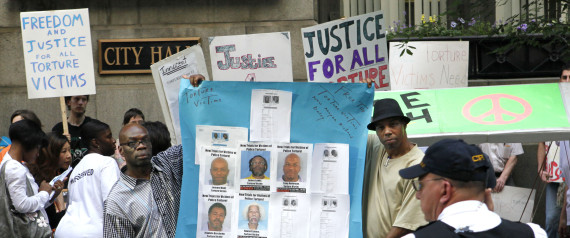
Victims of police torture in Chicago get reparations...
Finally some of the victims of police torture in Chicago are being compensated in some way. It certainly does not erase the harm done the victims but at least some official recognition is being given. What do you think?...
http://www.huffingtonpost.com/2015/04/14/chicago-police-torture-reparations_n_7064072.html?utm_hp_ref=chicago&ir=Chicago
Thursday, April 16, 2015
Websites for demographic data...
You need to collect demographic data for your neighborhood. You should list this data on a Google Doc which you share with me. You may also turn this into a blog post if you wish. You could write a blog post about the neighborhood you are studying that includes the demographic data you found.
Refer to your handout describing the Neighborhood History Project for what should be included in regards to demographic data. Demographic data should include…
Race/Ethnicity
Average income
Percentage of people under poverty line
Density of the neighborhood’s population
Percentage of residents that are immigrants
Is it a residential, commercial, industrial or mixed use community?
Most of the current demographic data will be based on the last census taken in 2010 and so will be four year old data at this point.
This website put together by the Heartland Alliance, one of Chicago’s oldest and best social service agencies includes a downloadable PDF document that includes almost all the demographic data you will need for your community area. You will need to download the PDF…
http://socialimpactresearchcenter.issuelab.org/resource/chicago_neighborhood_indicators_2000_2012_1
The website City-Data is one of the most complete sources of demographic information on the web. The only source that is more complete is the U.S. Census Bureau itself. But U.S. Census data is “raw data” that is not broken down by neighborhood or explained simply in percentages. City-Data takes the census data and makes it easier to understand. This link provides a map of Chicago neighborhoods that you can click on. Once you select a neighborhood on the map, the page that comes up will give almost all the demographic data you need…
http://www.city-data.com/nbmaps/neigh-Chicago-Illinois.html
It is NEVER a good idea to rely on one source. So check out these other websites and verify the data closes matches what is on City-Data.
Some teachers will tell you never to use Wikipedia. I am not one of them. Wikipedia can be a useful source of information BUT NEVER TRUST WIKIPEDIA BY ITSELF! Always double check the info at other sources. This Wikipedia page list all the Chicago community areas and neighborhoods. Select the link to the Wikipedia page for the community your researching and you will get both demographic data and neighborhood history as well…
http://en.wikipedia.org/wiki/Community_areas_in_Chicago
This website put together by the University of Illinois at Chicago (UIC) gives data on how neighborhoods have changed over the decades by only goes up to 2000…
http://www.uic.edu/cuppa/voorheesctr/Gentrification%20Index%20Site/Main%20Neighborhood%20Change%20Revised.htm
This website put together by Northwestern University includes health data about various communities in Chicago…
http://chicagohealth77.org/
This page of the site lists the race/ethnicity percentage for each of the 77 community areas in Chicago…
http://chicagohealth77.org/characteristics/demographics/
This website provides the percentages of foreign born (immigrant) from the 1930’s through the 2009 for each community area…
http://www.robparal.com/downloads/ACS0509/HistoricalData/Chicago%20Community%20Areas%20Historical%20Data.htm
This website put together by Illinois Action for Children gives race/ethnicity data and the percentage of children in each community living in poverty…
http://www.actforchildren.org/site/DocServer/2010_Census_Data_Fact_Sheet_by_Chicago_Community_Area.pdf?docID=1741
This article includes a animated gif that shows racial changes in Chicago’s neighborhoods from 1910 until 2000. Note the “black belt” or Bronzeville which emerges in 1920 and than how African-American neighborhoods expanded after the civil rights area of the 1960s. Also note the growth of Latino neighborhoods after 1980…
http://www.huffingtonpost.com/2013/01/29/chicago-racial-demographi_n_2575921.html
Subscribe to:
Posts (Atom)